Languages Guide
Welcome to the Language Proposal Guide! This guide walks you through the steps and best practices for proposing a new language on MereLingo, and for correcting one that is already live.
Anyone with an account can propose a language. A proposal is a request, not a language — nothing appears on the site until a moderator approves it. To keep spam and vandalism down, you can submit up to 3 proposals every 7 days. We may add auto approvals or other paths in the future.
pending
Waiting for a moderator. While a proposal is open you can still edit it or withdraw it yourself.
needs changes
A moderator read it and asked for something to be fixed. Their notes appear at the top of your proposal. Correct the fields and save, and it goes straight back into the queue.
approved
The language is published and available across MereLingo. You can tag content, add lexemes, and reference it normally. You stay credited as the person who added it, not the moderator who approved it.
rejected
Not published, with a reason attached. Because a rejected proposal never became a language, nothing can have been attached to it and its ISO code stays free — so a better proposal for the same language can still be made later.
withdrawn
You pulled it back before a moderator acted. It leaves the queue and frees up the ISO code again.
Only one open proposal can hold a given ISO code at a time. If someone has already proposed the language you had in mind, you will be pointed at theirs instead of creating a duplicate.
Correcting a live language amendment
A published language is not frozen. If you spot a wrong native name, a misfiled country, or a description that needs work, open the language and use Suggest an Edit. That raises an amendment: the same queue and the same moderators as above, but the proposal carries the current entry pre-filled so you only change what is wrong.
Two things differ from proposing a new language. An amendment must actually change something, and its rationale is required — a reviewer is weighing your version against live data, so they need to know what is wrong with the current one and what backs up your correction. When they open it they see a field-by-field diff, not a wall of unchanged values.
Some problems are too big for an amendment — a mix-up like Chinese vs Mandarin that only becomes obvious later. Chinese is ambiguously associated with Mandarin, but there are dozens of Chinese languages (Yue, Wu, Min, and Hakka, among others). Sometimes renaming the entry would not be enough, content is already attached to the wrong language. When that happens we flag the published language and lock it from new resources while we research and migrate the existing data to the correct one.
Track yours, and see what others have suggested—proposals page.
Key Features Overview
There are a couple key features you will need to know in order to propose a new language on MereLingo.
Native Name Required
The native name of the language is what it calls itself.
- French→français
- Spanish→español
- Korean→한국어
- Japanese→日本語
English Name Required
The English name is used to give the language at least one anchor, and it also helps with easy of access for beginners, as well as sorting.
ISO Code Required
The ISO (ISO 639) code is the standardized 3-letter code for the language (if available). This helps with identification and categorization.
- French→fra
- Spanish→spa
- Korean→kor
- Japanese→jpn
For more information and to find a list of iso codes, visit List of ISO 639 Language Codes (Wikipedia).
State Required
When we talk about the ‘state’ of a language, we are talking about whether it is living, ancient or a conlang
Living
A natural language that is currently spoken and used by a community of speakers.
Spanish
A Romance language that grew out of the Latin spoken in medieval Castile and spread across the Americas through colonization. With roughly half a billion native speakers it is second only to Mandarin, and it is an official language in twenty countries. Its spelling is close to phonetic, which makes it an unusually forgiving first language to learn.
Korean
The language of both Koreas and a large diaspora, written in Hangul, an alphabet designed in the 15th century under King Sejong to be learnable in a day rather than borrowed from Chinese characters. Its grammar is agglutinative and verb-final, and speech levels encode the relationship between speakers in the verb ending itself.
Swahili
A Bantu language of the East African coast, shaped by centuries of Indian Ocean trade and carrying a sizable layer of Arabic vocabulary. It serves as a lingua franca for well over a hundred million people across Tanzania, Kenya, Uganda, and the DRC, most of whom speak it as a second language alongside a local one.
Welsh
A Celtic language of Britain, and a good example of a living language that is small but far from static. After a long decline it is now compulsory in Welsh schools, used in government, and spoken by several hundred thousand people — a reminder that living is about an active community of speakers, not speaker count.
Ancient
A language that is no longer anyone’s first language, but is still actively studied, taught, and used — in liturgy, scholarship, or law.
Latin
The language of Rome and, long after the empire, of European scholarship, science, and law. It never really stopped being written: it remains an official language of the Vatican, supplies the naming system for every described species, and is still taught in schools worldwide. Its descendants — Spanish, French, Italian, Portuguese, Romanian — are living languages in their own right.
Ancient Greek
The language of Homer, Plato, and the New Testament, spanning roughly a thousand years and several dialects before shifting into the Koine that spread across the Hellenistic world. It is studied today mostly to read those texts directly, and it is the quarry most English scientific and technical vocabulary was cut from. Modern Greek is its living continuation, but the two are far apart.
Sanskrit
The classical language of South Asia and the vehicle of the Vedas, the epics, and a vast philosophical and scientific literature. Its grammar was described by Pāṇini around the 4th century BCE in an analysis so rigorous it still informs modern linguistics. It remains in daily liturgical use across Hinduism, Buddhism, and Jainism, and is one of India's scheduled languages.
Conlang
A conlang (constructed language) is a language that has been intentionally created by individuals or groups, rather than evolving naturally.
Esperanto
Created in 1887 by L. L. Zamenhof, a Polish-Jewish ophthalmologist, as an international auxiliary language meant to foster peace and easy communication across nations. It draws vocabulary mainly from Romance languages (with some Germanic and Slavic influence) and uses a highly regular grammar with no exceptions. It's the most successful constructed language ever made for real-world use, with an estimated hundreds of thousands to millions of speakers worldwide and an active literary and cultural community.
Quenya (Elvish)
Created by J.R.R. Tolkien (who was a philologist), author of the Lord of the Rings, as one of several Elvish languages in his Middle-earth legendarium. Heavily inspired by Finnish and Latin, and reflects Tolkien's belief that language and mythology are inseparable. It's the most fleshed-out fictional language of the 20th century, with dictionaries, grammars, and a devoted scholarly fan community continuing to reconstruct and extend it.
Klingon
Created by linguist Marc Okrand for Star Trek. Klignon was designed to sound alien and harsh to English speakers, It has a dedicated fan base, a Klingon Language Institute, translated literary works (including Hamlet), and is one of the few conlangs with real fluent speakers.
Vulcan
Also created by Marc Okrand for Star Trek, meant to reflect Vulcan culture's emphasis on logic and emotional restraint. It's less fully developed than Klingon. Fans have expanded it considerably.
Country Code Optional
The country code represents the primary country or region where the language is spoken (that is, choose the country with the most native speakers). This helps users identify the geographical context of the language and is also used for the flag display. List of country codes
Description Optional
The description is a brief overview of the language. It can include information about the language’s history, cultural significance, and other relevant details. Pages will be created for each language later, so you don’t need to include everything here.
Language Examples
| Name | English | ISO Code | State | Country Code |
|---|---|---|---|---|
| íslenska | icelandic | isl | living | is |
| tagalog | tagalog | tgl | living | ph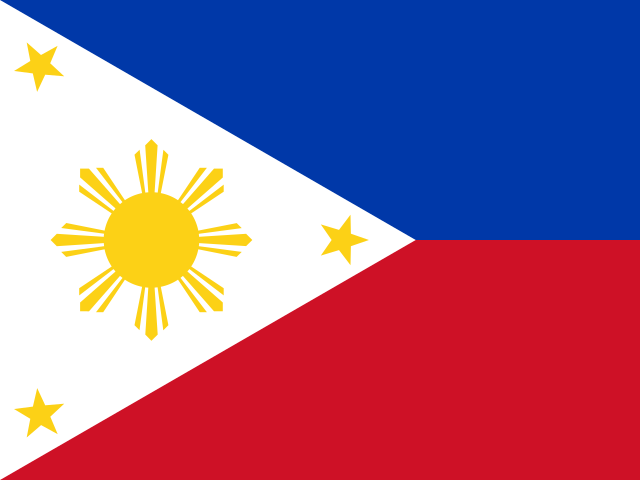 |
| malagasy | malagasy | mlg | living | mg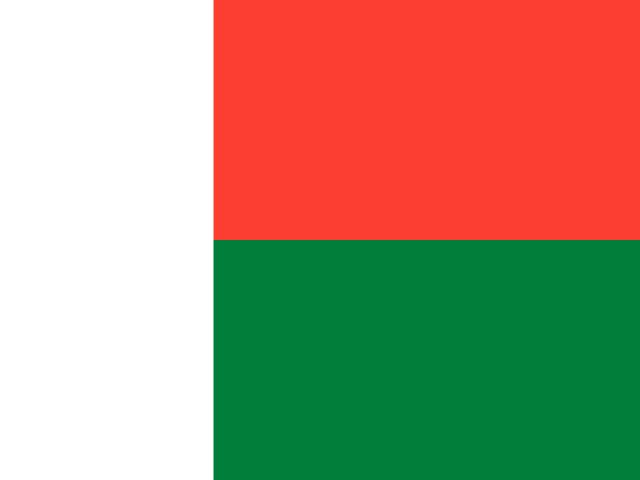 |
| 日本語 | japanese | jpn | living | jp |
| dansk | danish | dan | living | dk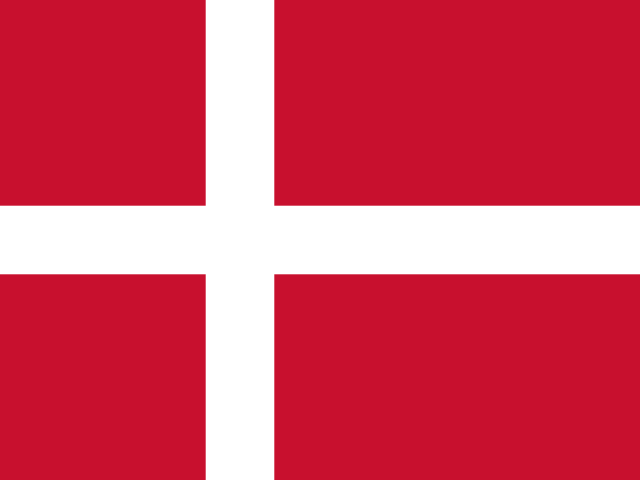 |
| ἑλληνική | ancient greek | grc | ancient | gr |
| latina | latin | lat | ancient | va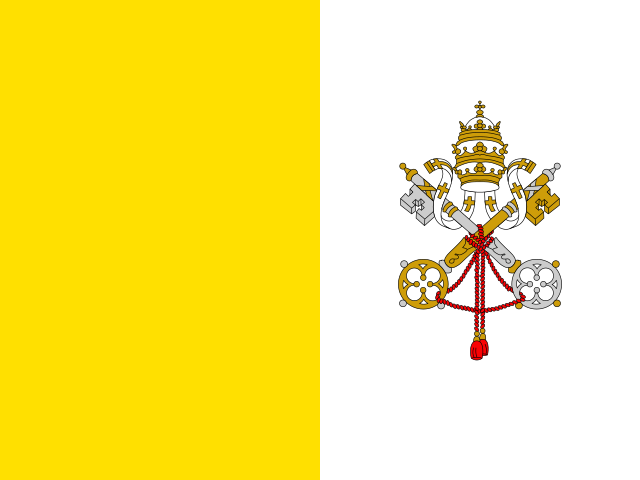 |
| quenya | elvish | qya | conlang | — |
Want to help? Adding or correcting a language is the easiest way.